 Image 1 of 5
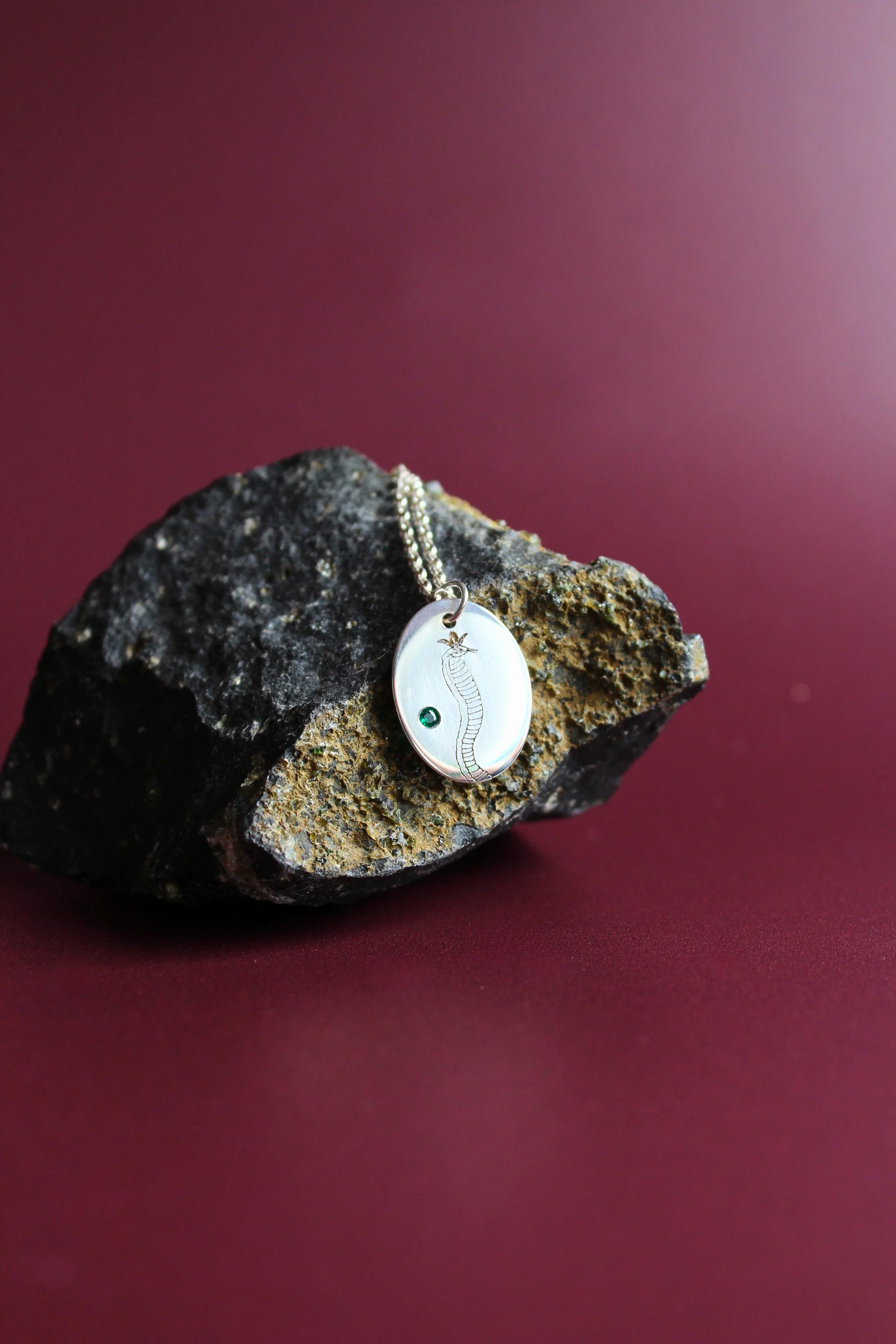 Image 2 of 5
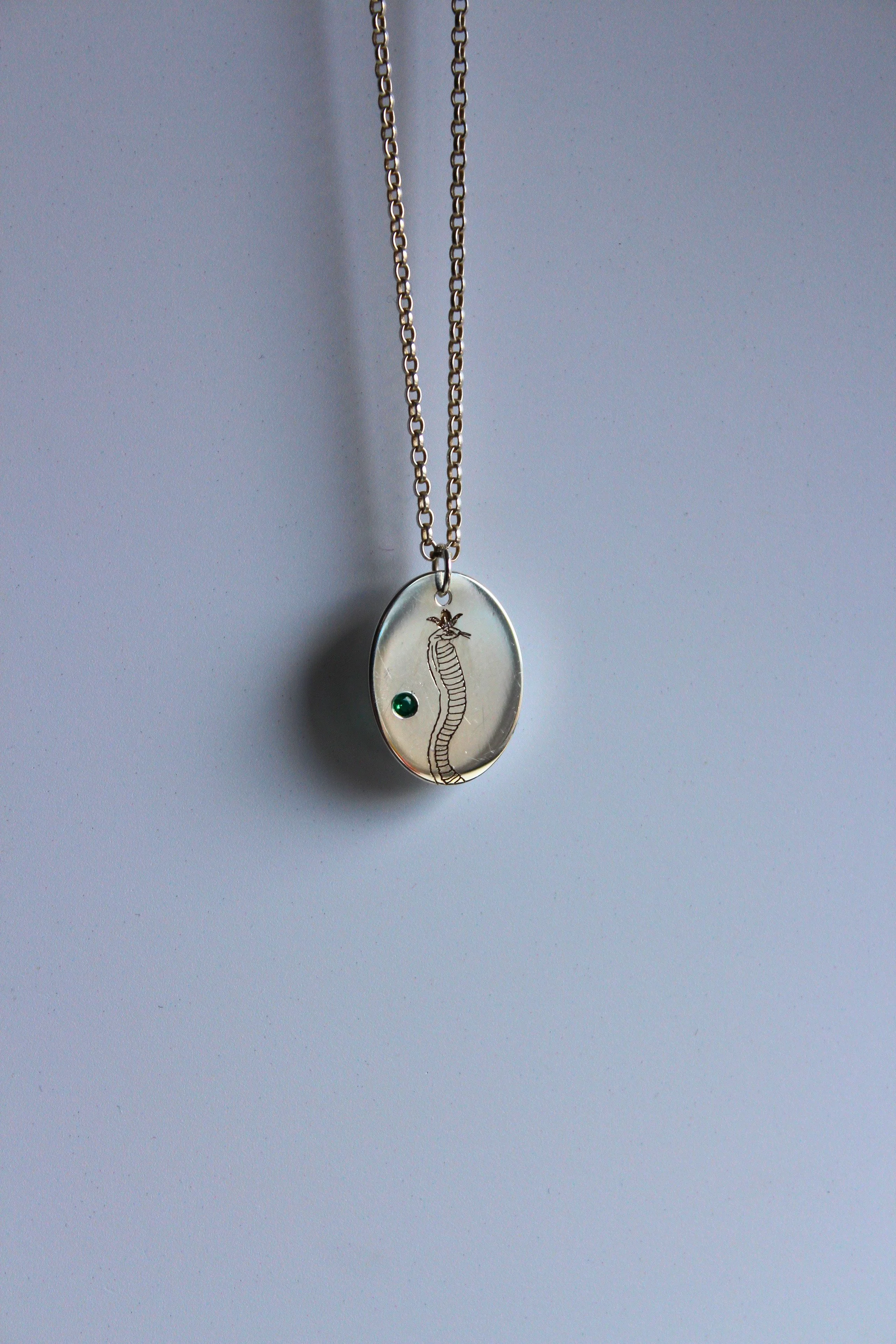 Image 3 of 5
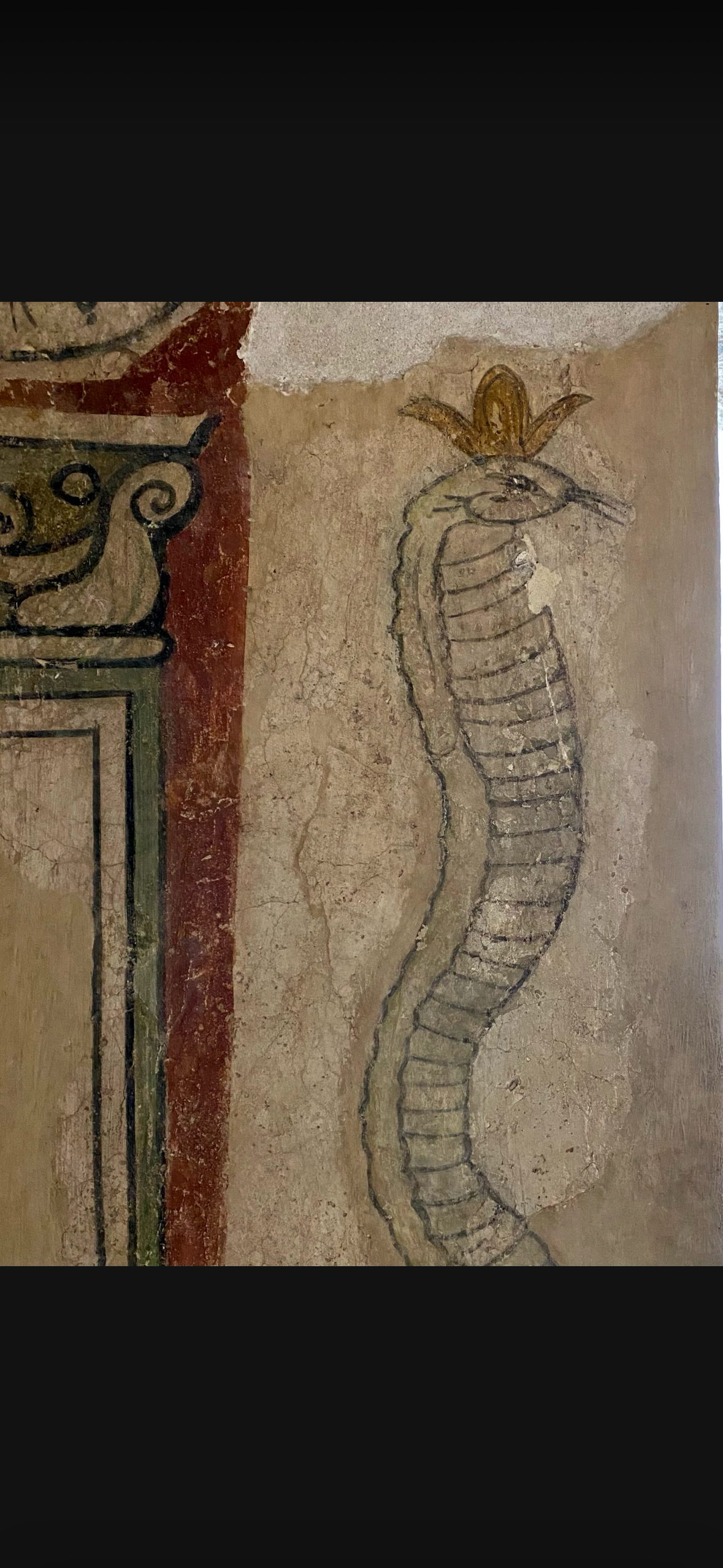 Image 4 of 5
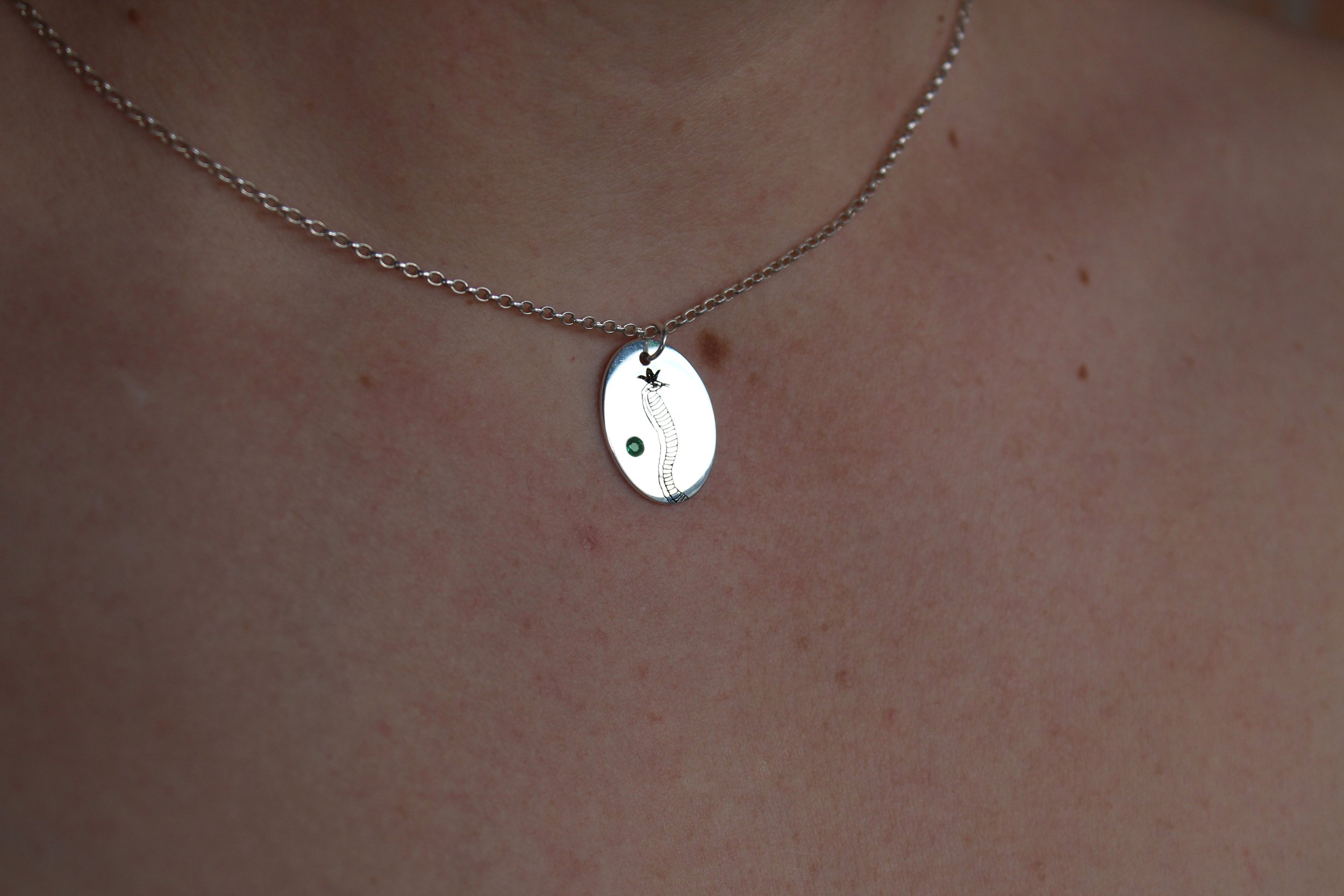 Image 5 of 5
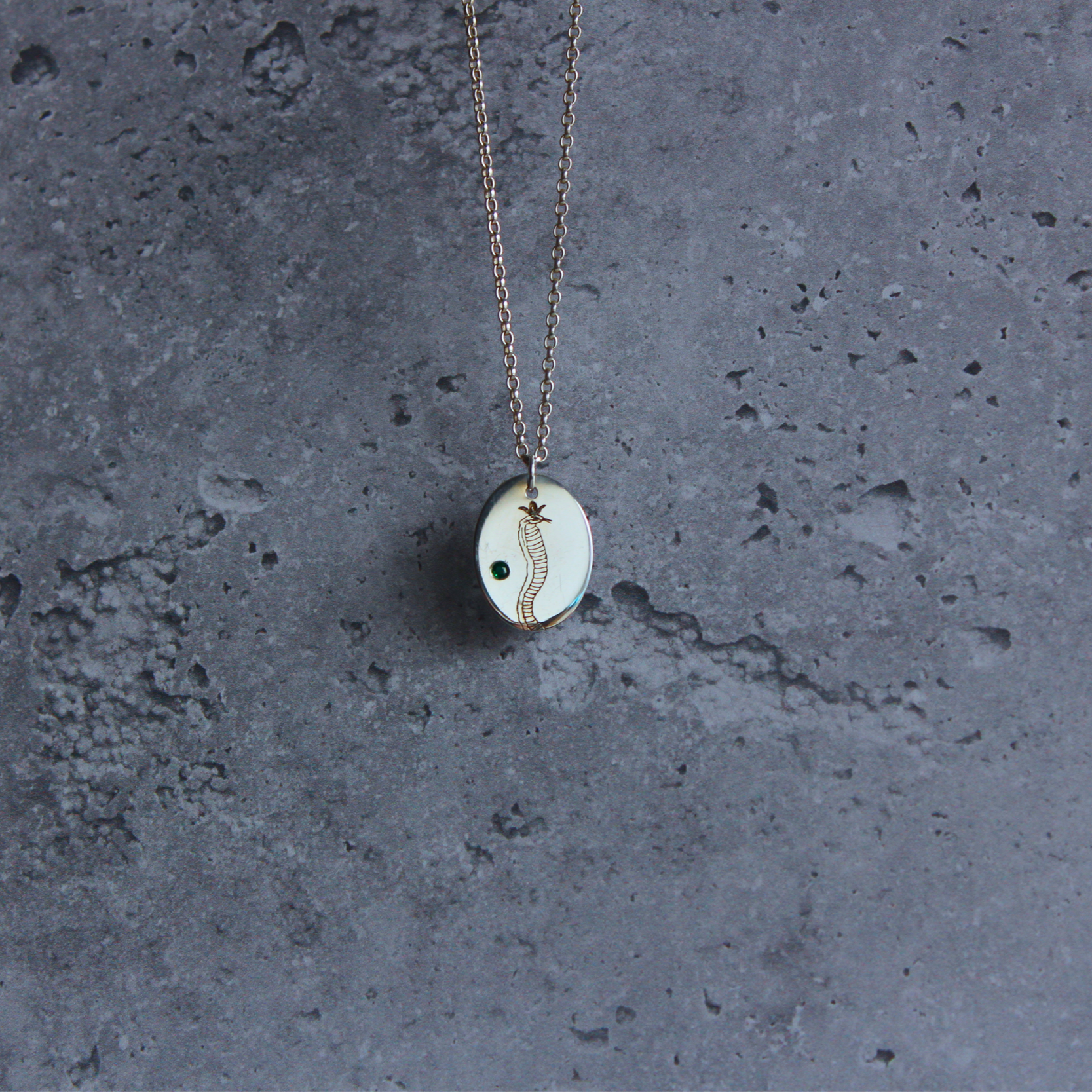
Crowned snake pendant, set with a 2mm emerald cabochon
20mm x 15mm oval pendant in sterling silver or gold vermeil
For those who carry authority without needing to announce it.
The source: The image on this pendant is taken from a painted serpent in the Tigran Tomb, Alexandria, Egypt — a tomb Lucinda visited in person. The Tigran Tomb sits above ground, directly over the famous catacombs of Kom el Shoqafa, and dates to roughly the second century CE. It was found submerged and excavated in 1952. Inside, painted on the short walls flanking the entrance to the burial chamber, two serpents rear upright, each protecting the tomb.
Art historian Marjorie S. Venit, writing in the American Journal of Archaeology (1997), identifies the left serpent — the one engraved on this pendant — as Isis-Thermouthis.
Thermouthis was the Egyptian grain goddess, frequently depicted as a cobra or asp, and closely linked with Isis in Greco-Roman Egypt. Isis-Thermouthis in her serpent form was a guardian, but also brought her people prosperity, fertility and peace.
What makes this image particularly significant is who claimed Isis-Thermouthis. Cleopatra publicly styled herself as the New Isis, a political and religious identity that made her more legible to the Egyptian people. This isn’t a generic protective serpent. Its the goddess Cleopatra claimed, protecting her capital city.
The stone: Egypt's emerald mines are among the oldest in the world, and have been worked since at least 330 BC. Cleopatra was said to be a particular fan of emeralds. According to legend, she wore emeralds and used them to decorate her chambers. She was also said to send emeralds engraved with her own likeness to friends and allies.
The variety of beryl coloured by chromium, emerald is one of the most prized gemstones in the world. This pendant is set with a 2mm emerald cabochon.
The talisman: Wear this as a reminder that sovereignty that doesn't need to announce itself to be real. You wear the crown.
Materials: Engraved pendant, 2mm emerald cabochon. Available in sterling silver or gold vermeil. All pieces are handmade in London to order. Current lead time is two weeks.
Crowned snake pendant, set with a 2mm emerald cabochon
20mm x 15mm oval pendant in sterling silver or gold vermeil
For those who carry authority without needing to announce it.
The source: The image on this pendant is taken from a painted serpent in the Tigran Tomb, Alexandria, Egypt — a tomb Lucinda visited in person. The Tigran Tomb sits above ground, directly over the famous catacombs of Kom el Shoqafa, and dates to roughly the second century CE. It was found submerged and excavated in 1952. Inside, painted on the short walls flanking the entrance to the burial chamber, two serpents rear upright, each protecting the tomb.
Art historian Marjorie S. Venit, writing in the American Journal of Archaeology (1997), identifies the left serpent — the one engraved on this pendant — as Isis-Thermouthis.
Thermouthis was the Egyptian grain goddess, frequently depicted as a cobra or asp, and closely linked with Isis in Greco-Roman Egypt. Isis-Thermouthis in her serpent form was a guardian, but also brought her people prosperity, fertility and peace.
What makes this image particularly significant is who claimed Isis-Thermouthis. Cleopatra publicly styled herself as the New Isis, a political and religious identity that made her more legible to the Egyptian people. This isn’t a generic protective serpent. Its the goddess Cleopatra claimed, protecting her capital city.
The stone: Egypt's emerald mines are among the oldest in the world, and have been worked since at least 330 BC. Cleopatra was said to be a particular fan of emeralds. According to legend, she wore emeralds and used them to decorate her chambers. She was also said to send emeralds engraved with her own likeness to friends and allies.
The variety of beryl coloured by chromium, emerald is one of the most prized gemstones in the world. This pendant is set with a 2mm emerald cabochon.
The talisman: Wear this as a reminder that sovereignty that doesn't need to announce itself to be real. You wear the crown.
Materials: Engraved pendant, 2mm emerald cabochon. Available in sterling silver or gold vermeil. All pieces are handmade in London to order. Current lead time is two weeks.